If you are thinking about buying a family home in Baltimore County, you are probably balancing more than bedrooms and bathrooms. You may be comparing commute times, yard size, school zoning, home condition, and the monthly cost of ownership all at once. In a market that still moves quickly, having the right plan can help you focus on what matters most and avoid expensive surprises. Let’s dive in.
Why Baltimore County Appeals to Family Buyers
Baltimore County offers a wide range of housing options, but one theme stands out: this is still a strongly single-family market. According to county housing data, 46.8% of homes are detached and 24.3% are attached single-family homes, which gives buyers a broad selection of layouts, lot sizes, and neighborhood settings.
For many households, that mix creates more flexibility than you might expect. You may find a detached home with a larger yard, a split-level with extra living space, or an attached home that gives you more square footage at a lower price point than a detached option nearby.
The area also has a long-established suburban feel because most homes are not new construction. Only 1.0% of housing units were built in 2020 or later, so your search will usually center on resale homes with distinct character, varied floor plans, and different levels of updating.
What the Housing Stock Looks Like
If you start touring homes in Baltimore County, you will likely see many mid-century and late-20th-century properties. The largest age bands are homes built in the 1950s at 18.2%, followed by the 1980s at 14.1%, the 1990s at 13.3%, the 1970s at 13.3%, and the 1960s at 12.9%.
That matters because the age of a home often affects both layout and maintenance. Older homes may offer larger lots, established streetscapes, and solid construction, but they can also bring older roofs, plumbing, electrical systems, or drainage issues that deserve close review.
You will also notice a mix of architectural styles rather than one standard countywide look. Common suburban forms from the 1950s through the 1980s include Ranch, Split-Level, Split-Foyer, Minimal Traditional, Transitional Ranch, and Two-story Massed homes, often with Colonial Revival details.
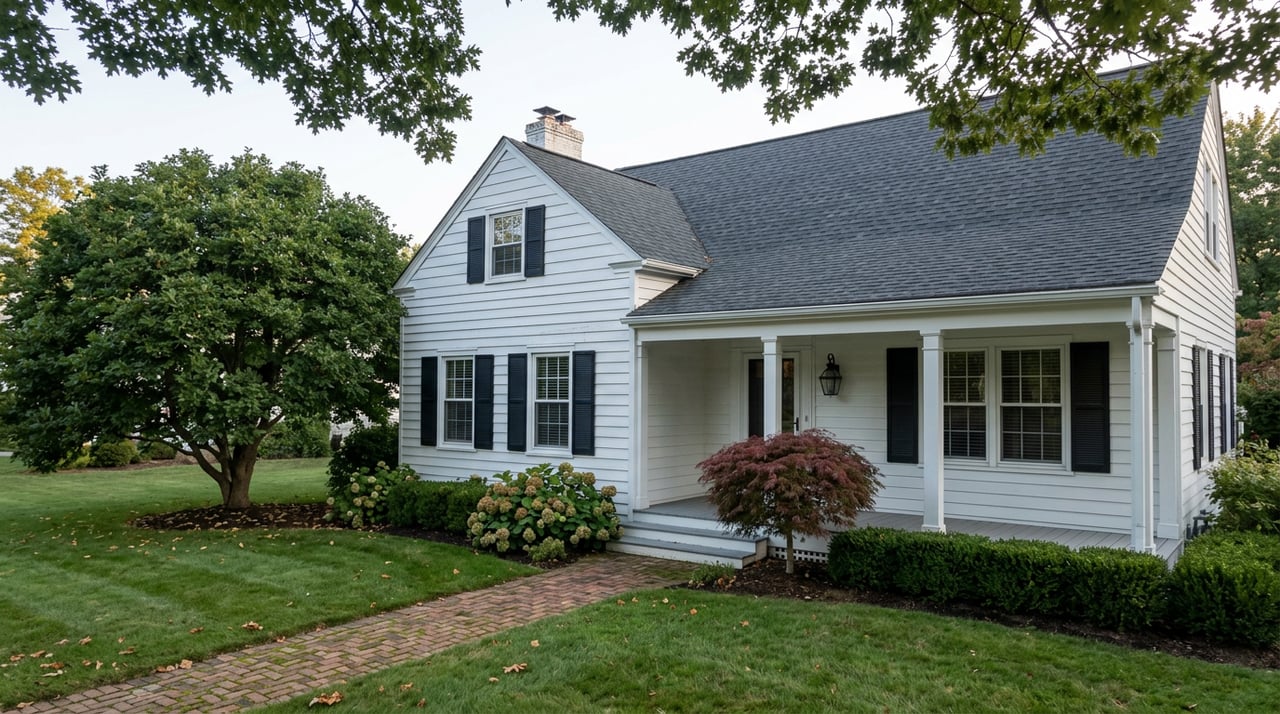
In some areas, you may also see bungalow, cottage, Foursquare, Tudor, Colonial, and Cape Cod influences. For you as a buyer, that means the right home is often less about one perfect style and more about finding the right combination of condition, layout, lot, and location.
Budget Beyond the List Price
When buying a family home in Baltimore County, the list price is only part of the picture. QuickFacts reports a median value of owner-occupied homes at $349,300, while Maryland Realtors reported a 2025 median sale price of $365,000 for Baltimore County.
Those numbers are useful benchmarks, but your real budget should also include monthly ownership costs and upfront closing expenses. QuickFacts shows a median monthly owner cost with a mortgage of $2,049, which can help you frame the payment side of your search.
Closing costs matter too. Typical closing costs often run about 2% to 5% of the purchase price, separate from the down payment, so on a $365,000 purchase that rough range is about $7,300 to $18,250.
Know the Local Recurring Costs
Baltimore County buyers should pay close attention to taxes and property-related charges before making an offer. The county real property tax rate is $1.10 per $100 of assessed value, and the county transfer tax rate is 1.5% of consideration.
There is also a state recordation charge of $2.50 per $500 or fraction thereof. These costs can affect both your cash needed at settlement and your overall affordability.
One local detail is especially important to confirm early. Baltimore County notes that Metropolitan District water and sewer charges are billed on the annual property tax bill for affected properties, so you will want to ask whether a specific home carries those charges.
Understand the Market Pace
Family buyers should be prepared for a market that still favors sellers. Baltimore County ended 2025 with just 1.7 months of inventory and a median of 12 days on market, and Realtor.com described the county as a seller’s market in March 2026.
In practical terms, this means the best-fit homes may not sit for long. If you are searching in a location with a convenient commute or a move-in-ready home with outdoor space, competition may be stronger.
The good news is that preparation gives you a real advantage. Buyers who already know their budget, financing range, school-zone priorities, and commute limits are usually in a better position to act quickly and confidently.
Check School Zoning Early
If school assignment is part of your home search, verify it before you write an offer. Baltimore County Public Schools serves more than 111,000 students across 176 schools, and the district states that a student’s zoned school is determined by the home address through its school locator.
This is one of the easiest details to assume and one of the most important to confirm. Enrollment also requires proof of residency and other documents, so it is smart to treat school zoning as a due-diligence item early in the process.
Even if you are not buying primarily for school assignment, this step can still help you make a more informed location decision. It is better to verify an address than rely on a listing, a map, or word of mouth.
Compare Commute and Transportation Options
Baltimore County covers a large area, so commute time can vary meaningfully from one location to another. The county’s mean commute time is 28.0 minutes, but your actual experience will depend on where you need to go each day and how flexible your schedule is.
The county points residents to a range of transportation options, including MTA buses, subway and light rail, CountyRide, MobilityLink, rideshare, and regional transit tools. MARC Penn Line service also connects Baltimore Penn Station, BWI Thurgood Marshall Airport, and Union Station in Washington.
For many buyers, this means a home search should include a real-world commute test. A house that looks ideal on paper may feel very different once you account for school drop-off, office schedules, hospital shifts, or regular airport access.
Think About Outdoor Space and Daily Life
Outdoor space is often a major reason families consider Baltimore County in the first place. County Recreation and Parks reports 216 parks, 43 community facilities, and more than 82 miles of trails.
That kind of access can shape your search in practical ways. You may decide that being near a park, trail, or recreation facility matters almost as much as the square footage inside the house.
For some buyers, a larger private yard is the priority. For others, a manageable lot near public green space may be the better fit. The key is to think honestly about how you want to spend your time after move-in.
What to Watch During Home Tours
Because so much of the county’s housing stock is older, touring carefully matters. Pay close attention to the roof, HVAC, plumbing, electrical systems, and any signs of moisture or drainage issues.
These are not small details. They can affect your repair budget, your comfort in the home, and your willingness to compete on price or terms.
A home inspection is a key part of understanding what you are buying. Inspection findings can also help you negotiate repairs or credits when needed, especially if the home has deferred maintenance or aging major systems.
Build a Smart Offer Strategy
In a fast-moving market, a competitive offer is usually built before you find the house, not after. That starts with a strong preapproval, a clear ceiling for your monthly housing cost, and a realistic understanding of closing costs and recurring expenses.
It also helps to do your homework ahead of time on school zoning, commute patterns, and whether a home may have added water and sewer charges on the tax bill. When those answers are already in place, you can move faster without feeling rushed.
For eligible buyers, Maryland’s Mortgage Program may also be worth exploring early. The program offers 30-year fixed-rate loans, down payment assistance, and homebuyer education, which can be especially helpful if you are stretching for more space or trying to preserve cash for repairs and moving costs.
A Practical Family-Home Checklist
Before you buy a family home in Baltimore County, make sure you can answer these questions clearly:
- What monthly payment range feels comfortable for your household?
- How much cash will you need for down payment and closing costs?
- Have you checked the exact school zoning for the address?
- Does the commute work for your weekday routine?
- How much work does the home need in the next few years?
- Are there property tax, transfer tax, and utility-related charges you have factored in?
- Do you want more private yard space, easier maintenance, or access to nearby parks and trails?
If you can answer those questions before you offer, you are more likely to buy a home that works well not just on day one, but for the years ahead.
Buying in Baltimore County often means weighing lifestyle and long-term cost just as much as purchase price. With established housing stock, quick market conditions, and a wide range of neighborhood settings, having experienced guidance can make the process clearer and more manageable. If you are planning your next move, Linda Fredeking can help you evaluate options, move quickly when the right home appears, and make a decision with confidence.
FAQs
What types of family homes are common in Baltimore County?
- Baltimore County has a strong single-family housing base, including detached and attached single-family homes, with many Ranch, Split-Level, Colonial-influenced, Cape Cod, and other mid-century or late-20th-century styles.
What should buyers budget for a Baltimore County home purchase?
- In addition to the purchase price, you should budget for closing costs, property taxes, transfer tax, state recordation charges, and any recurring charges such as Metropolitan District water and sewer fees if they apply to the property.
How competitive is the Baltimore County housing market for buyers?
- Baltimore County remains a seller’s market, with 1.7 months of inventory and a median of 12 days on market at the end of 2025, so buyers should be ready to make informed decisions quickly.
How do school assignments work for homes in Baltimore County?
- Baltimore County Public Schools states that school zoning is determined by the home address, so buyers should verify the assigned school for any property they are considering before writing an offer.
What should families look for when touring older Baltimore County homes?
- Because many homes were built decades ago, buyers should look closely at the roof, HVAC, plumbing, electrical systems, and any signs of moisture or drainage problems, then use the home inspection to better understand condition and possible repair needs.
What transportation options should buyers consider in Baltimore County?
- Buyers should consider driving routes and available transit options such as MTA buses, subway, light rail, CountyRide, MobilityLink, rideshare, and MARC service, depending on their daily routine and work location.